Python Career Opportunities: What Can You Do After Learning Python?
Learning Python can lead to several technology career paths, including software development, backend programming, data analytics, machine learning, and artificial intelligence. Your options depend on your interests, practical experience, projects, and the additional skills you develop.
If you are a student, fresher, or working professional wondering what to do after learning Python, this guide can help you compare career options and choose a suitable learning path.
For learners looking for a Python course in Bhubaneswar, this guide covers career paths, required skills, beginner projects, and practical next steps.
Is Python a Good Career Choice?
Python is a popular programming language with readable syntax and a broad collection of libraries and frameworks. It is used in software development, data analysis, automation, and AI-related work, making it a useful starting point for many technology careers.
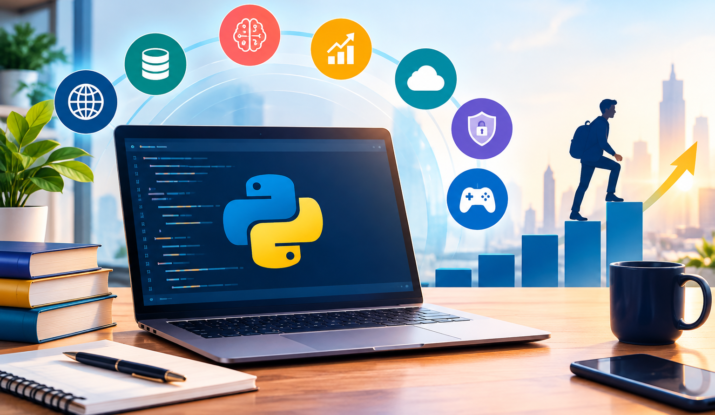
After learning Python, you can explore career paths such as:
- Python Developer
- Backend Developer
- Data Analyst
- Data Scientist
- Machine Learning Engineer
- Artificial Intelligence Developer
- Python Automation Developer
Each role requires different skills. Backend development focuses on server-side applications, databases, and APIs, while data analytics focuses on finding patterns and insights in data. Choose a path that matches your interests and goals.
What Jobs Can You Get After Learning Python?
Here are common career options after learning Python, along with skills and projects that can help you prepare for each role.
Python Developer
A Python developer builds applications, APIs, automation tools, and software solutions. The work may include creating features, fixing errors, working with databases, and maintaining applications.
To prepare for a Python development role, focus on learning:
- Python fundamentals and object-oriented programming
- Data structures and algorithms
- SQL and database management
- Git and version control
- APIs and application testing
- Frameworks such as Django or Flask
- Basic application deployment
Practise writing programs independently, then build applications that demonstrate how you use Python to solve practical problems.
Backend Developer
Backend developers build the server-side parts of websites and applications, including application logic, authentication, databases, APIs, and data processing.
Python is commonly used for backend development with frameworks such as Django and Flask.
Important skills for backend development include:
- Python programming
- Django or Flask
- SQL and relational databases
- REST APIs
- Authentication and authorization
- Git and debugging
- Testing and deployment fundamentals
Example project: Build a student management system that allows users to add student records, update information, and retrieve data from a database. This project helps you understand how programming, databases, and application logic work together.
Data Analyst
Data analysts study datasets to identify trends, answer business questions, and communicate insights. Python libraries such as Pandas and NumPy help clean and analyze data, while visualization tools help present findings.
Important skills for data analytics include:
- Python programming
- SQL
- Excel
- Basic statistics
- Pandas and NumPy
- Data visualization
- Business intelligence tools
Example project: Analyze a sales dataset to identify the best-performing products, monthly sales trends, and changes in customer demand.
If you are interested in developing these skills, explore Data Analytics Training in Bhubaneswar.
Data Scientist
Data science combines programming, mathematics, statistics, data analysis, and machine learning. Python helps data scientists prepare datasets, explore patterns, visualize findings, and develop predictive models.
To build your skills in data science, progress through:
- Python fundamentals
- SQL and data handling
- Statistics and probability
- Data analysis and visualization
- Machine learning fundamentals
- Model evaluation and interpretation
Example project: Analyze historical sales data to explore trends and build a model that estimates future sales. Data science generally requires a stronger foundation in mathematics and statistics than basic Python development.
Machine Learning Engineer
Machine learning engineers develop systems that learn patterns from data and use them to make predictions. Their work may include preparing data, training and evaluating models, and integrating models into applications.
Python is widely used in this field because of its ecosystem of data-processing and machine learning libraries.
Focus on learning:
- Python programming
- Mathematics and statistics
- Data preprocessing
- Machine learning algorithms
- Model training and evaluation
- Relevant machine learning libraries
- Basic deployment concepts
Example project: Create a model that estimates house prices using relevant property features and a suitable dataset.
If you want to progress from Python fundamentals to machine learning, explore the Machine Learning Course in Bhubaneswar.
Artificial Intelligence Developer
Artificial intelligence includes systems that recognize patterns, process language, interpret images, or generate predictions and content. Python is used in machine learning, deep learning, natural language processing, and computer vision.
Begin with Python fundamentals and data handling. Then progress to:
- Mathematics and statistics
- Machine learning
- Deep learning fundamentals
- Natural language processing or computer vision
- AI libraries and frameworks
- Building and testing practical AI applications
Example project: Develop a simple text classification application that categorizes messages according to their content. AI is a broad field, so choose an area that interests you and build relevant projects as your knowledge develops.
Python Automation Developer
Python can automate repetitive tasks such as processing files, organizing data, generating reports, and working with APIs.
Useful skills for Python automation include:
- Python fundamentals
- File handling
- Functions and exception handling
- Working with CSV, Excel, and JSON files
- APIs and HTTP requests
- Scheduling scripts
- Logging and error handling
Example project: Create a Python script that reads data from multiple files, combines the information, and generates a summary report.
What Skills Should You Learn Along With Python?
Python is a foundation, not a complete skill set for every role. The additional technologies you need depend on your chosen career path.
| Career path | Important additional skills |
|---|---|
| Python Developer | SQL, Git, APIs, Django or Flask, testing |
| Backend Developer | Databases, REST APIs, authentication, deployment |
| Data Analyst | SQL, Excel, statistics, Pandas, visualization |
| Data Scientist | Statistics, mathematics, data analysis, machine learning |
| Machine Learning Engineer | Data preprocessing, algorithms, model evaluation |
| AI Developer | Machine learning, deep learning, relevant AI frameworks |
| Automation Developer | File handling, APIs, scripting, error handling |
For Python Development: Python → Core programming → SQL and databases → APIs → Django or Flask → Testing and deployment
For Data Analytics: Python → SQL → Pandas → NumPy → Statistics → Data Visualization
For Machine Learning: Python → Mathematics → Statistics → Data Processing → Machine Learning
For Artificial Intelligence: Python → Data Handling → Machine Learning → Deep Learning → AI Applications
You do not need to learn every technology at once. Start with Python fundamentals, then focus on the tools needed for your chosen career.
Can Freshers Get a Job After Learning Python?
Freshers can apply for Python-related roles, but completing a course alone does not guarantee employment. Employers may also assess problem-solving, practical experience, supporting technical skills, and the ability to explain projects.
If you are a beginner, focus on these activities:
- Practice writing Python programs regularly.
- Understand functions, data structures, loops, and exception handling.
- Build projects that solve practical problems.
- Learn Git and basic database concepts.
- Create a portfolio that demonstrates your work.
- Prepare to explain your code and the decisions behind it.
Practical experience can help you identify gaps in your understanding and prepare for technical interviews.
What Python Projects Should Beginners Build?
Projects help you apply programming concepts and demonstrate your skills. Start with small applications before moving to more complex projects.
Beginner Python project ideas:
- Calculator
- Quiz application
- To-do list
- Expense tracker
- Student management system
- Inventory management system
Intermediate Python project ideas:
- A web application using Django or Flask
- A REST API connected to a database
- A file-processing automation tool
- A sales data analysis dashboard
- A simple machine learning application
Understand the code, handle common errors, and document each project. A few well-developed projects are more useful than many projects you cannot explain.
Python Career Path for Beginners
If you are new to programming, follow this learning path.
Step 1: Learn Python Fundamentals
Start with variables, data types, operators, conditions, loops, and functions. Practice writing small programs to understand how these concepts work.
Step 2: Understand Core Programming Concepts
Learn lists, dictionaries, sets, tuples, file handling, exception handling, and object-oriented programming.
Step 3: Practice With Real Problems
Solve basic programming exercises and gradually work on problems that require several concepts together.
Step 4: Build Practical Projects
Create small applications and improve them as you learn. Practice debugging instead of relying only on tutorials.
Step 5: Choose a Career Direction
Decide whether you prefer software development, backend development, data analytics, data science, machine learning, AI, or automation.
Step 6: Learn Relevant Technologies
Choose the frameworks, libraries, databases, and tools that match your selected career path.
Step 7: Prepare Your Portfolio
Organize your projects, document their purpose, and practise explaining how you developed them.
This roadmap helps you move from Python fundamentals toward the skills required for a specific role.
Do You Need a Python Course to Start a Career?
You can learn Python through self-study, tutorials, documentation, exercises, and personal projects. Structured training may suit beginners who prefer a planned curriculum, instructor guidance, coding practice, and projects.
When choosing a Python course, consider:
- Whether the curriculum covers programming fundamentals in sufficient depth
- How much practical coding is included
- Whether you will work on projects
- Whether you can receive guidance when you encounter problems
- Whether the course supports your intended career path
If you are looking for a Python Course in Bhubaneswar, review the curriculum and practical learning opportunities before deciding whether it suits your needs.
How Long Does It Take to Learn Python?
The time required to learn Python depends on your experience, study time, practice routine, and goals. Beyond learning syntax, you need regular practice, debugging, and project work.
Use these practical milestones to assess your progress:
- Can you write programs without following a tutorial?
- Can you solve basic programming problems?
- Can you identify and fix common errors?
- Can you work with files, databases, or APIs where needed?
- Can you build and explain a complete project?
These milestones can help you decide when to move to more advanced topics.
Python Career Opportunities in Bhubaneswar
For students, freshers, and working professionals in Bhubaneswar, Python can be a starting point for exploring technology career paths.
Possible paths include Python development, backend development, data analytics, data science, machine learning, and automation. Requirements vary by employer and role.
Review job descriptions for roles that interest you and use their listed requirements to guide your learning and projects.
If you are considering Python training in Bhubaneswar, choose a program that aligns with your career goals and gives you opportunities to practise programming and build practical projects.
Frequently Asked Questions About Python Careers
What can I do after learning Python?
You can explore Python development, backend development, data analytics, data science, machine learning, AI development, or automation. Your options depend on the additional skills and practical experience you develop.
Is Python good for beginners?
Yes. Python’s readable syntax makes it a common starting point for learning programming. Beginners should start with fundamentals and practise writing programs regularly.
Can a fresher get a job after learning Python?
It is possible, but learning Python alone does not guarantee a job. Practical projects, problem-solving skills, supporting technologies, and interview preparation can improve your readiness.
Is Python enough to become a developer?
Python provides a programming foundation, but many development roles also require databases, APIs, frameworks, Git, testing, and deployment skills.
What should I learn after Python?
Choose based on your interests. Learn Django or Flask for Python-based web development, SQL and data analysis for analytics, or mathematics and machine learning for AI-related paths.
Can I learn Python without a programming background?
Yes. Start with basic concepts such as variables, conditions, loops, and functions. Regular practice and small projects can help you build confidence.
Is a Python course necessary for a career?
No. Self-study is a valid option. A structured course may be useful if you prefer an organized curriculum, instructor support, coding practice, and guided projects.
Start Building Your Python Skills
Python can be the first step toward several technology careers. Build strong fundamentals, choose a direction, practise consistently, and create projects that demonstrate your skills.
If you are exploring structured learning options, visit LogicWave Solutions’ Python course in Bhubaneswar to review the available course information and determine whether it aligns with your learning goals.
Start with the fundamentals, practise regularly, and gradually develop the skills required for your chosen career.