
How to Start a Career in Data Science: A Beginner’s Guide
Choosing the right data science course in Bhubaneswar can feel overwhelming, especially if you’re new to programming, Python, or machine learning. Before enrolling, it helps to understand what the field actually involves, what a syllabus should cover, and how Python fits into the learning path.
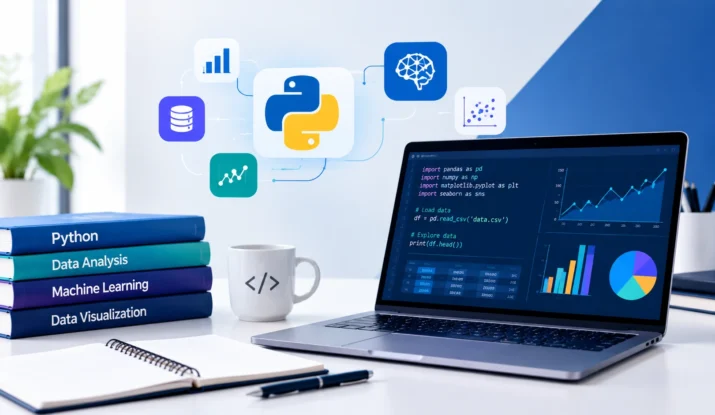
Data science combines Python, statistics, SQL, data analysis, visualization, and machine learning to help professionals turn raw data into useful insights. Whether you’re a student, graduate, working professional, or planning a career change, this guide breaks down what to expect.
What Is Data Science?
Data science is the process of collecting, cleaning, analyzing, and interpreting data to find meaningful patterns. Businesses generate large volumes of data from websites, transactions, and operations — data professionals turn that raw information into decisions.
The typical workflow includes:
- Collecting and cleaning data
- Exploring and analyzing it statistically
- Building visualizations
- Training and evaluating machine learning models
- Presenting findings clearly
The Learning Path
Python → SQL → Statistics → Data Analysis → Visualization → Machine Learning → Projects
Each stage builds on the one before it — this is why skipping straight to machine learning without Python and statistics fundamentals is where most beginners get stuck.
If you want to build the programming foundation first, our Python Course in Bhubaneswar covers that separately.
What the Course Covers
Python Fundamentals — syntax, variables, loops, functions, data structures, and object-oriented programming.
Python for Data Science — NumPy for numerical computing, Pandas for data manipulation, Matplotlib and Seaborn for visualization, and Scikit-learn for machine learning.
Statistics — mean, median, variance, standard deviation, probability, distributions, and correlation.
SQL — SELECT, WHERE, JOIN, GROUP BY, and subqueries for retrieving data from databases.
Data Cleaning & EDA — handling missing values, duplicates, outliers, and inconsistent formats before modeling.
Data Visualization — bar charts, histograms, scatter plots, and distribution plots to communicate findings clearly.
Machine Learning — regression, classification, clustering, feature engineering, and model evaluation.
Practical Projects — applying the entire workflow to realistic datasets.
Interested in going deeper on machine learning specifically? See the Machine Learning Course in Bhubaneswar.
Course Fees
Fees for data science training in Bhubaneswar vary based on course duration, depth of syllabus, classroom vs. online format, trainer experience, number of projects, and whether certification and placement support are included.
Rather than choosing based on price alone, check what’s actually covered — does it go beyond an introductory overview of Python, does it include real SQL and statistics training, and how many hands-on projects are involved. Confirm the current fee directly with the training provider, since batch pricing can change.
Who Can Learn Data Science?
- B.Tech, BCA, MCA, B.Sc, and M.Sc students
- Engineering and computer science graduates
- Software developers and IT professionals
- Data analysts
- Working professionals and career changers
A non-IT background isn’t a barrier — it just means budgeting extra time for programming and statistics fundamentals before the pace picks up.
Data Science vs. Data Analytics vs. AI
- Data Analytics focuses on reporting, dashboards, and trend analysis.
- Data Science adds predictive modeling and machine learning to that foundation.
- Artificial Intelligence is the broader field that machine learning feeds into.
If dashboards and business reporting sound closer to what you’re after, explore Data Analytics training in Bhubaneswar instead.
Why Projects Matter
Data science isn’t learned through theory alone. Projects walk you through the full cycle: collect data, clean it, explore it, visualize it, build a model, evaluate results, and present findings. A few project ideas to practice with:
- Sales trend analysis by region and product
- Customer segmentation with clustering
- House price prediction using regression
- Customer churn analysis
- E-commerce order and behavior analysis
Career Opportunities
| Role | What it involves |
|---|---|
| Data Analyst | Reporting, dashboards, pattern identification |
| Data Scientist | Statistics and ML applied to business problems |
| Machine Learning Engineer | Building and maintaining ML systems |
| Business Analyst | Bridging business needs and data findings |
| Python Developer | Building software, APIs, and automation |
| Data Engineer | Databases, pipelines, and infrastructure |
Completing a course doesn’t guarantee a job on its own — practical skills, a project portfolio, and interview preparation matter just as much.
Classroom vs. Online Training
Classroom training suits learners who want face-to-face interaction and a fixed schedule. Online training suits those who need flexibility around work or college. The right choice depends on how you learn best.
FAQs
What is a data science course?
A structured program covering Python, SQL, statistics, data visualization, and machine learning to build practical data skills.
Do I need coding experience to start?
No. Most programs begin with Python fundamentals and assume no prior background.
Is SQL necessary for data science?
Yes — most business data is stored in relational databases, so retrieving and filtering it with SQL is a core skill.
How long does it take to learn data science?
There’s no fixed duration — it depends on your existing programming knowledge, how much time you can commit, and how deep the syllabus goes.
What is the course fee?
Fees depend on duration, format, and what’s included. Confirm the current fee and batch details directly with the training provider.
Can a non-IT student learn data science?
Yes, though it typically takes extra time upfront to build programming and statistics fundamentals.
Is machine learning part of data science?
Yes — it’s usually introduced after learners build a foundation in programming, statistics, and data analysis.